

Better Call Saul is the best show on TV, and season 5 just proved it
Ameliorate Call Saul is the all-time show on Television, and season 5 just proved information technology

Two years ago, but before Flavor 4 of Better Call Saul aired, I wrote about how Amend Call Saul was the best show on TV, bar none. Having simply watched the Flavour 5 finale final night, I'g pleased to report that this is nevertheless the example.
Amend Phone call Saul is a smart, intense, stylish drama. Its interim, storytelling and cinematography are miles ahead of what you lot'll observe on most other primetime shows. The fact that we have simply one season to become is bittersweet.
- Lookout man the all-time streaming services
- The best streaming devices can connect you with your favorite shows
- Check out the best Roku channels
A lot of things have inverse about Amend Telephone call Saul in the last two seasons, and with only 10 episodes left to go, we should look a few more twists and turns forth the way. The end of Ameliorate Call Saul Season vi will dovetail with the beginning of Breaking Bad Season 1, and Saul Goodman'due south (Bob Odenkirk) life has to collapse but a little bit more before he gets to where we first met him.
With 83% of the show behind us, information technology's time to look back on what's fabricated Amend Call Saul then good, and discuss why it's maintained its unimpeachable level of quality for such a long fourth dimension.
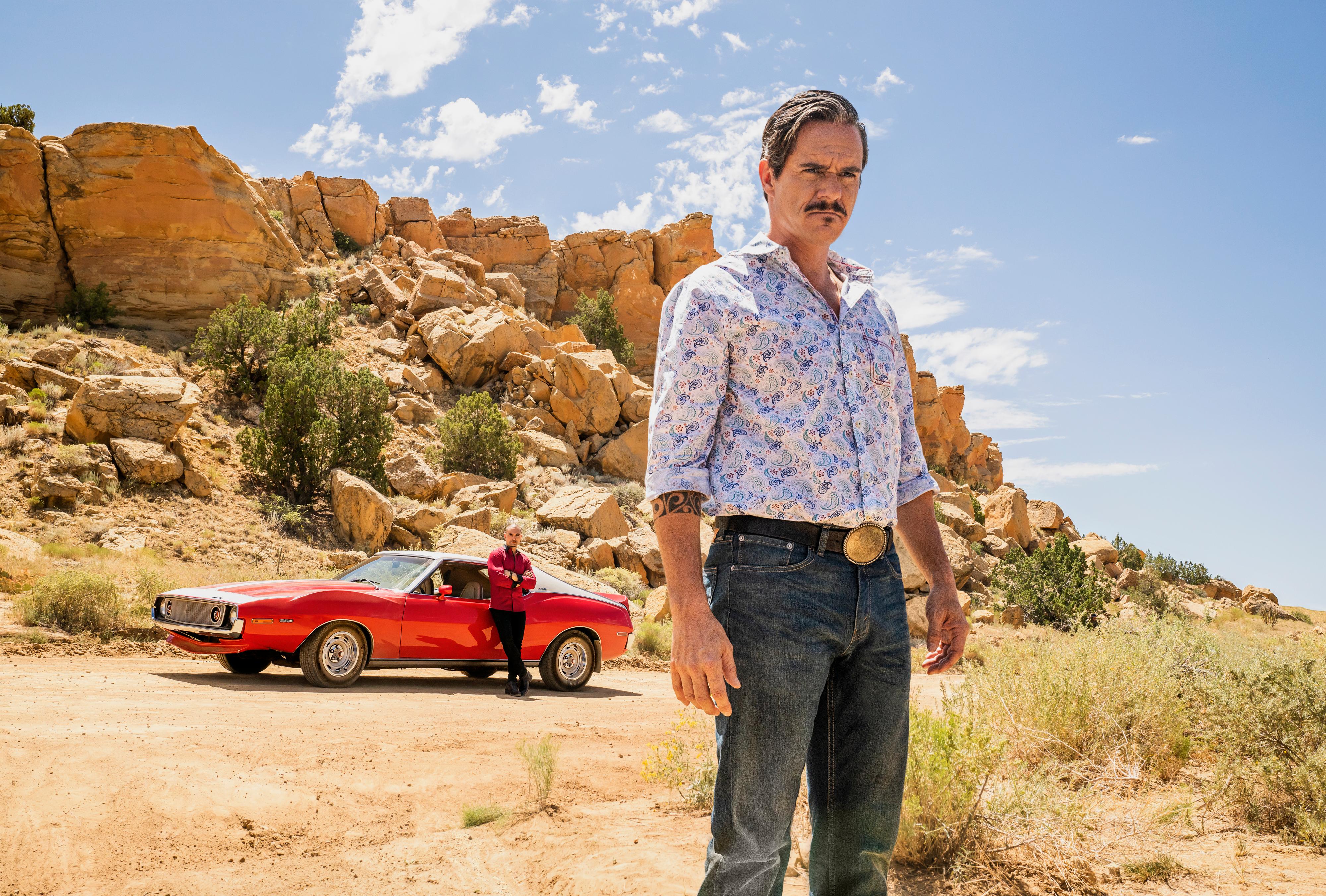
Better Phone call Saul gets the basics right
There's no secret to why Meliorate Phone call Saul works then well: Information technology's a well-written show with a talented cast and crew. It sounds simple, but if every testify had these qualities, primetime TV would be a cultural mecca instead of a wasteland. The level of intendance and dash that goes into every episode of Better Telephone call Saul. I would dearest to see how many drafts each script goes through, and how many takes each scene requires; I would not be at all surprised if at that place'southward enough cutting room floor material to create some other 50 episodes.
Analyzing the screenwriting in Better Phone call Saul could be an article all by itself, merely I think there are two main qualities that set it autonomously from about other shows. The first is how the testify embraces silence; the 2d is how the prove resists ultimatums.
Without going too deep downward the Film Theory 101 rabbit hole, film and tv are visual mediums. As such, dialogue isn't as important to them equally information technology is in, say, a novel or a radio drama. (For a good example of why visuals e'er trump dialogue onscreen, watch the first twenty minutes of 2001: A Space Odyssey.) TV commonly needs more dialogue than movies, only Better Call Saul still economizes what its characters take to say. What they leave unsaid is oft just as of import.
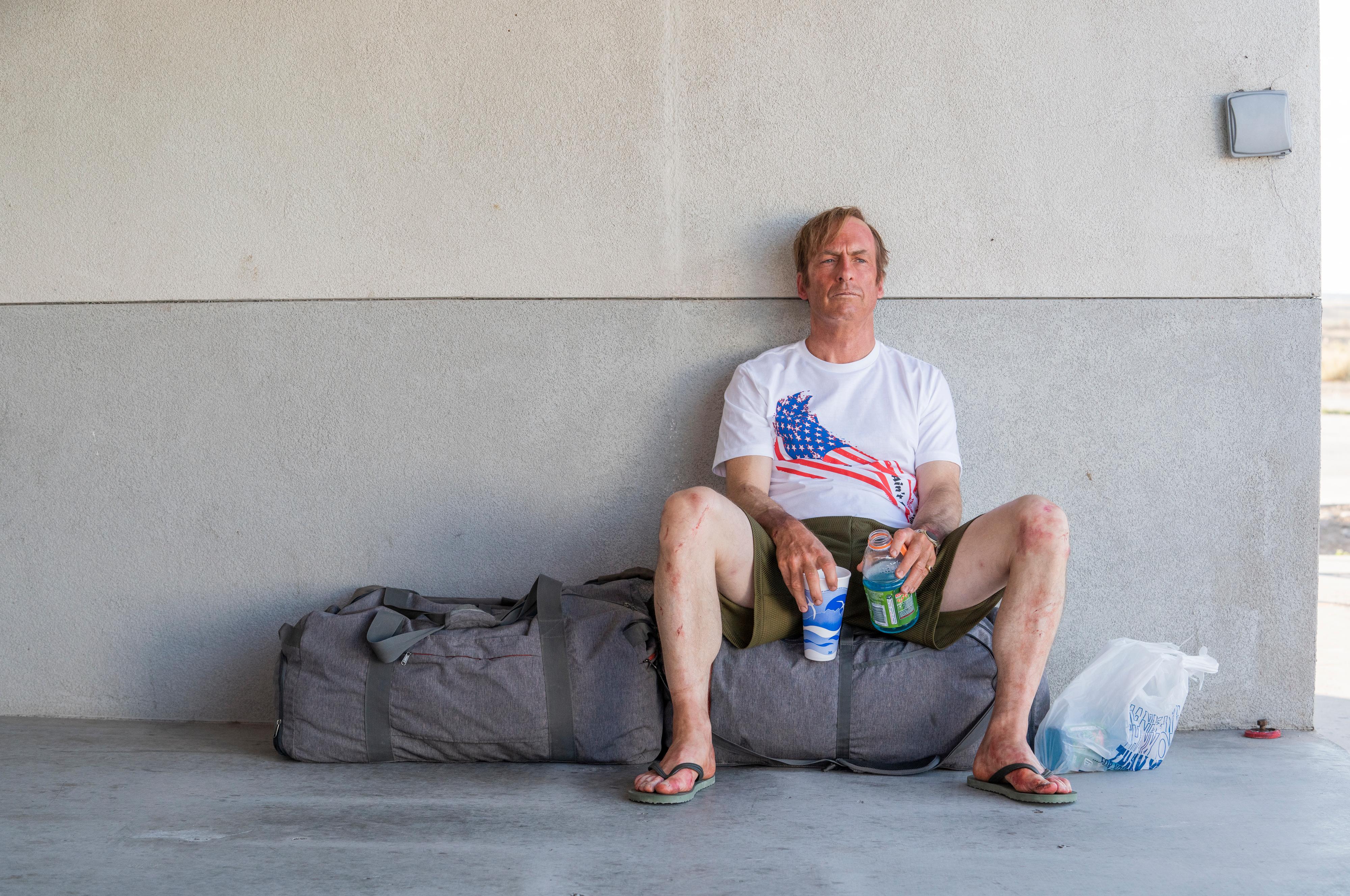
The best recent example of this is in "Bagman," perchance the best episode in Flavor 5.. As a quick refresher, Saul agrees to selection up $7 meg in cash to bail a dangerous client out of jail. The pickup goes awry, and he and taciturn fixer Mike Ehrmantraut (Jonathan Banks) must trek across the desert while evading an armed pursuer in an SUV. It'southward essentially a short action/thriller film in the guise of a serial drama.
At every major plot point, the temptation to accept characters spout exposition must have been overwhelming. But Saul and Mike rarely talk — even when information technology seems similar they would need to. They coordinate complex actions — such as pushing a car into a ditch, finding acceptable (if disgusting) h2o supplies and creating an elaborate trap for their pursuer — with just a few words each.
When they talk, it's often more to reveal character traits than to expound on their situation. This economy of words lets the episode focus on vast, sweeping shots of the New Mexico landscape and environmental storytelling involving terrain, peak and obstacles along the way. This could have been a noisy, frantic episode; the fact that it's quiet and calm until information technology's not makes the story tense and unpredictable instead.

Better Call Saul'southward stellar characters
I touched on the "no ultimatums" point a few years ago, and the trend has connected since and then. In every flavor of Better Call Saul, I've been impressed by how realistically the characters act. Information technology'due south not that the show itself is tremendously grounded — you can't make a law-breaking drama about an ambulance-chasing con artist without going at least a picayune over-the-top — but that the characters don't take rigid worldviews.
Kim Wexler (Rhea Seehorn) demonstrates merely how flexible the testify's characters can exist. Season v is, essentially, a protracted practice in seeing just how far Saul tin can push her before she finally gives upwards on him. He changed his identity, he helped become criminals back on the street, he withheld of import information and he lied, again and over again, until the last lie virtually cost him his life.
A lesser show would have had Kim storm out in a huff at some point, telling Saul that he's finally gone too far, and that he's lost the best function of himself, and then on. Instead, Kim sometimes rages and sometimes accepts, only nosotros learn that she tolerates so much of Saul's bad behavior because she has the aforementioned impulses. Seehorn has done a masterful chore balancing Kim'south need to help with her desire to harm, and to say that she's become the evidence's hole-and-corner weapon would still, somehow, exist underselling her contribution.
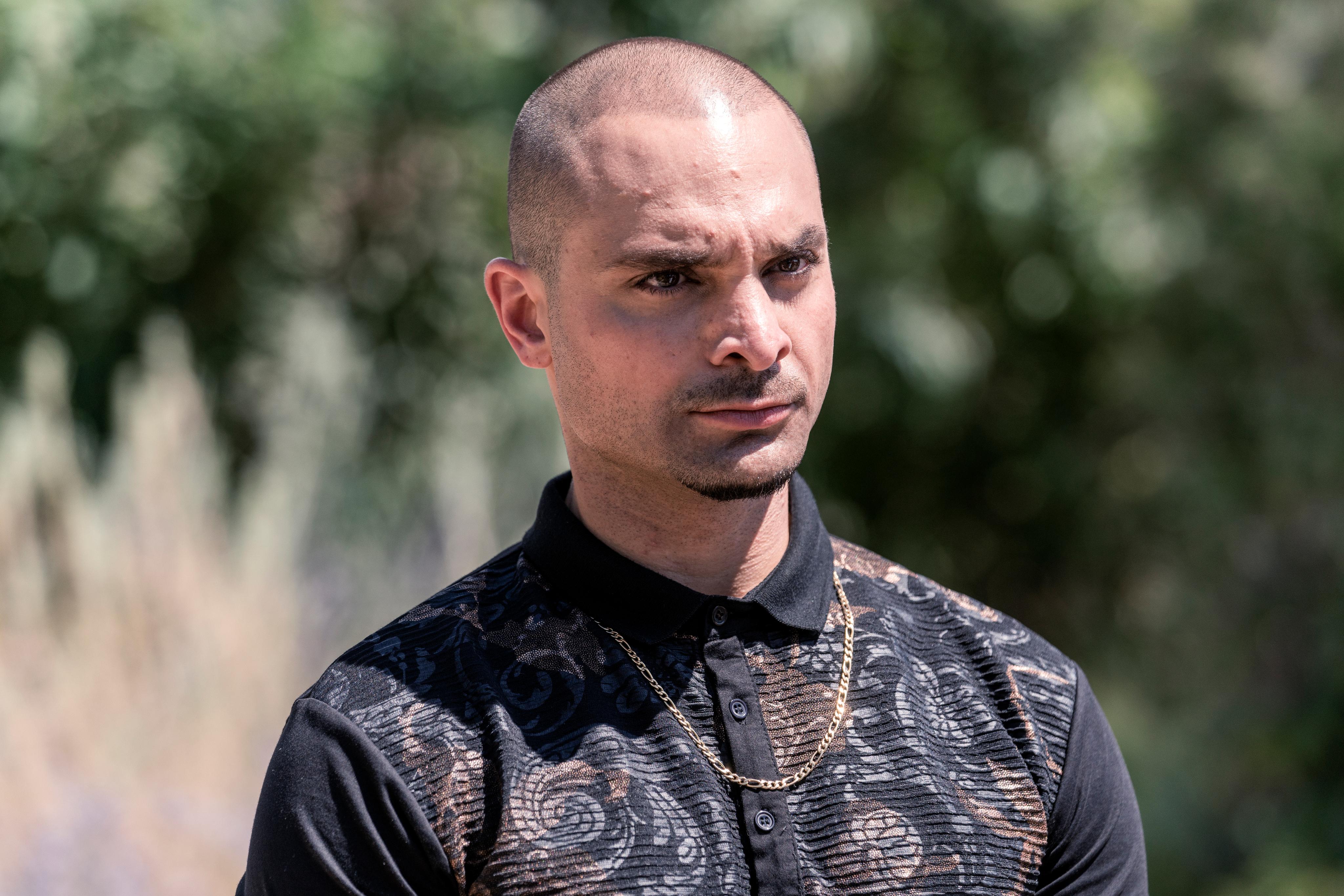
Mike's arc is some other perfect case of how nuanced characters pb to more interesting situations. It'south like shooting fish in a barrel to view Mike every bit a battle-hardened stoic, who has a rigid set of rules that have kept him live. And however, we've seen over and over how he's not quite as inflexible equally he seems. Murdering a man in common cold blood isn't but business concern equally usual; it sends him into a spiral of alcoholism and random violence. When Nacho Varga (Michael Mando) wants out of the cartel, Mike (almost) sympathizes with Nacho'southward dilemma, and acts on the younger human's behalf. Mike even shares incredibly sensitive data with Saul because he, likewise, understands what it's like for criminal connections to threaten a loved one.
And equally for Saul himself, I really practice recall that simply a comic actor like Odenkirk could infuse the protagonist with such joy and such pathos. Saul has become a Pagliacci figure, whose good humor goes only and so far to mask the turmoil that he's hiding just underneath the surface. With every criminal act, Saul's moral center slides merely a little further abroad, and it's been incredible to watch Odenkirk show u.s.a. the transition over the form of five years.
Why Better Call Saul beats other shows
Interestingly, the final time I wrote this piece, my coworkers suggested five other TV dramas that were more or less on the same level. When I asked this time, they could come up with merely two. Either Better Call Saul has gotten better, or others shows have let their quality sideslip, simply it's becoming that this show is very nearly in a class of its ain.
Yet, the two comparable shows that came up were Succession and Westworld. Information technology'due south difficult to pit the iii shows against each other, since Improve Telephone call Saul is a straight drama, Succession is a satire and Westworld is science-fiction. But if I'grand going to make the claim that Better Call Saul is the best show on TV, I should at least endeavour to qualify why it beats the contest.
Regarding Succession, it's difficult to observe a single negative affair to say nigh the evidence. It's funny, it'due south incisive and it'due south unpredictable. Other writers have alleged that Succession is the all-time show on Telly, and information technology's hard to argue with the claim they propose.
The only skilful argument I have at my disposal is that Better Call Saul keeps a rock-solid tone, rather than trying to balance one-act and drama. Yeah, Better Call Saul is sometimes very funny, but the sense of humor is always in service of the larger crime-thriller story. Succession wants to tell a story, but it besides wants to make you lot laugh, and every one time in a blue moon, the two can be at odds.
Westworld is still one of the virtually compulsively watchable sci-fi dramas on Telly, but it seems clear that the show is beginning to put style over substance. Flavour 3 has been more than convoluted and over-the-top than previous outings. When information technology's firing on all cylinders, it's tremendously entertaining — and when information technology'due south not, the metaphors band a scrap hollow, and the scientific principles don't seem quite as cohesive equally they should be.
Looking ahead for Better Phone call Saul
In whatever example, Better Phone call Saul has had v incredible seasons, and all that's left now is to end strong. When you consider that the evidence is a prequel with a predetermined endpoint, information technology had the odds stacked against it, but still managed to demonstrate that it had a story worth telling.
Part of me hopes this is our last outing in the Breaking Bad mythos — it's been pretty thoroughly plumbed past at present. But then once more, if Better Phone call Saul could surprise us, who's to say that another spin-off couldn't practise the aforementioned?

Source: https://www.tomsguide.com/opinion/better-call-saul-season-5-best-show
Posted by: hopperswuzzy.blogspot.com
0 Response to "Better Call Saul is the best show on TV, and season 5 just proved it"
Post a Comment